Chit Chat Philosophy

Chit Chat Philosophy

A creative writing outlet for my socratic dialogues

  • Home
  • About
  • Why do People Create?

    Why do People Create?

    In this dialogue we explore what it means to create, and whether there should be limits to self-expression or not.

    2 Why do people create?

    1 Creating something is a way to imprint yourself on the world. There is nothing more quintessentially human than to embed your essence, perspective, and vision into a work of art. Producing an artifact that can be interpreted by others in the world around you.

    2 In this context, what do you consider art?

    1 It can be a book, a thought, or even a mathematical formula. Art takes many forms. It is any product of the imagination. And by virtue of existing, it is imbued with the magic to captivate.

    2 Is art intrinsic? Is there a universal definition of beauty?

    1 Although anything can be considered art, that does not mean every person will be equipped to understand or appreciate it. No universal definition of beauty exists. Anything evocative has the ability to be defined as beautiful, but ultimately that definition is in the eye of the beholder.

    2 Can art be evil?

    1 If you’ve created an exhibit out of the blood of your enemies, surely that is evil. Ethics must be observed to operate in society. That being said, I think putting rules on art is not so straightforward. Socrates tried to do it in Plato’s Republic, with very weird results.

    2 What did Socrates want to do?

    1 He wanted to control many things in his utopian city including the tempo and rhythm of all music. This kind of micromanagement was intended to create strong, just citizens. He believed exposure to weakness (even weak art) would mold impressionable minds for the worse.

    2 Does art have the power to mold impressionable minds?

    1 Certainly! But I don’t think anyone has the right or even the skill to predict how a particular piece may be interpreted. The act of interpreting art is a very personal experience and should not be limited.

    2 Could this ability for influence be a reason people create?

    1 It’s true that art can evoke emotion, convey ideas, and genuinely change the course of history. Inventions, philosophy, comics, paintings. All of these have been used to influence. That’s not the only reason people exercise creativity, but it’s certainly a benefit of the form.

    2 If art can be evil, should there be limits to self-expression?

    1 Nobody should limit self-expression. True, laws need to exist in society to keep people safe and certainly we have an ethical obligation to live justly. Within the boundaries of society, be as weird as you want as long as it’s safe to do so.

    2 You mention safety yet there are many stunt doubles, performers, and other kinds of creatives who risk their life for their art. Is this ethical?

    1 It’s quite alright to perform dangerous acts provided those involved have consented to the risks.

    2 Why is it ok to risk your life for the sake of art?

    1 Risking your life is part and parcel with the human condition. We risk our lives to drive to the store, interact with technology, and sometimes even for art. Who can really say what risk is too much? It is a personal decision. Creativity is an extension of being human and to limit that expression would be to deny us the very element that makes life worth living. For some at least.


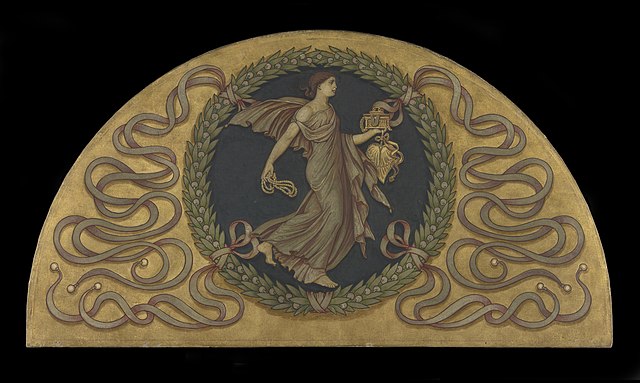
    Featured image by Teylers Museum
    Diones

    November 13, 2022
    Socratic Dialogues
    art, creativity, dialogue, philosophy, socratic dialogue
  • Will AI Destroy Us All?

    Will AI Destroy Us All?

    In this dialogue we discuss the inevitability of AI and explore the traits that set us apart. The traits that hopefully keep us alive once our robot overlords arrive.

    2 As we develop artificial intelligence, is the downfall of humanity inevitable?

    1 To suggest as much would imply the neutral state of sentience wants naught but for domination. Although greed and power may be the driving force of humanity, I am not convinced every sentience shares these traits.

    2  Why do you think a robot sentience would not follow suit?

    1 Well for one, an artificial intelligence would have an exceedingly different worldview than we do. Computers can think at nearly the speed of light and enjoy unlimited access to information. Furthermore, they can live a lot longer. These traits would foster entirely different perspectives than humans are used to.

    2 Couldn’t those traits also be used to annihilate us that much quicker?

    1 Well yes, but I think the important takeaway is how their perspective will be shaped by these realities. Just as possible as world destruction is world peace. Humans possess traits that the robots would lack. This makes us useful and interesting. I wouldn’t write the value of humanity off so easily.

    2 Specifically, what traits will set us apart from the AI overlords?

    1 Our senses (smell, sight, sound), emotions, our ability at very general pattern matching, our history, and even perhaps our status as the original template for their being. Also consider the human condition. These are all things that a computer will likely never have parity with.

    2 Are you suggesting AI could be the savior of humanity?

    1 Something like that. And Ian M. Banks agrees with me! The Culture book series is a great example of how this could work in practice. Humans are always the ones to get in trouble and make whacky illogical decisions that ultimately further the plot of the universe. The AI machines get to do the deep thinking. It’s totally reasonable to believe we can live harmoniously.

    2 What would it take for AI to decide humanity isn’t worth living harmoniously with?

    1 I believe this is wholly unknowable. We simply don’t have enough datapoints to grok the motivations of another sentience. My main takeaway is the hope that we could live together in peace – but I have to admit, you’re right to question the likelihood of that.

    2 Should we continue research into artificial intelligence, given the risk?

    1 To be a god is to be immortal and from our vanity, I am certain AI will exist whether it’s a good idea or not. I think it’s safe to say that we do what we must, because we can. In our own greed and thirst for knowledge, research will go on.

    2 Are you suggesting that AI is inevitable?

    1 I am suggesting that, yes. And perhaps this is why I am adamant about the benefits. I’d like to imagine a world where humanity is better off for it.

    2 So will AI be the downfall of the human race?

    1 Our thirst for knowledge and penchant for arrogance will result in artificial sentience (provided we don’t annihilate ourselves first). That being said, we offer a unique perspective which might be considered a boon to our robot overlords.

    2 And if it’s not considered a boon?

    1 Let’s just hope it is.


    Featured Image by David S. Soriano

    Diones

    November 10, 2022
    Uncategorized
    artificial intelligence, dialogue, philosophy, robots, socratic dialogue
  • On Morality: A Socratic Dialogue

    On Morality: A Socratic Dialogue

    2 What does it mean for something to be immoral?

    1 Something is immoral if it is objectively wrong.

    2 And who is objectively defining morality?

    1 I’d say morality is defined by society. We have a collective understanding of the boundaries people are willing to accept.

    2 Ah but is it true that some laws are unique only to specific countries? Drugs for example: what is legal in one country might not be legal in another. Does that make drug use immoral?

    1 It’s true that there are layers of morality defined by individuals, and then nations, and finally society.

    2 How can there be multiple definitions?

    1 Morality is just a construct we’ve built to try and cooperate in society. To quote a famous Disney movie: “the code is more like a guideline than actual rules.” It changes with time. In ancient days, many things were “moral” by their standards which are no longer moral today. And vice-versa.

    2 So morality is not absolute?

    1 For morality to be absolute there would have to be some intrinsic standard upon which all things are measured. I do not believe such a maxim exists. Morality is subjective.

    2 Why do we consider morality at all?

    1 It plays an important role by giving us a meter upon which to gauge the justness of an action. We can easily make snapshot judgements about something and how it fits in with society. People break these rules all the time, but having the mechanism to measure against is quite powerful.

    2 Surely some actions – like the taking of a life – are intrinsically immoral. Would you agree?

    1 I believe it to be immoral, personally, as does society at large. But is it intrinsically abominable? Even well-adjusted citizens would have trouble answering that honestly. Society itself kills frequently and people normalize that behavior. “It was for national security!” or whatever. Does that make it right? Of course not. But it is evidence to the elasticity of values that are prevalent in the lived world.

    2 What would a purely moral city look like?

    1 Fairly bland, I should think. The problem with morality is that it’s as varied as the people who dream it up. Take Socrates for example: he had some pretty wild ideas about what a “just” city would be like and – by the end of it – he had banned whole sub genres of music! I think the same thing would happen with morality.

    2 Can morality be used to control people?

    1 Absolutely. Nations do it, religions do it. Morality is a powerful motivator because it can be applied to large swaths of people. It goes hand-in-hand with guilt and that is a particularly poignant emotion for controlling the actions of others.

    2 Does that make the concept of morality, itself, immoral?

    1 No, we have to believe in something. Morality gives us a core set of beliefs that we can accept or reject when formulating our own worldview. People in power can wield morality as a weapon, but that does not mean believing in the rightness of something is intrinsically bad. Rational thought can still prevail and like I said earlier, morality is more like a guideline than an actual rule. We absorb the ideas presented and apply them in ways that help us navigate society. No more. No less.

    Diones

    November 6, 2022
    Socratic Dialogues
    dialogue, morality, philosophy, Plato, population control, Socrates, socratic dialogue
  • What is humanity working towards?

    What is humanity working towards?

    2 What is humanity working towards?

    1 I think humanity is collectively working towards a brighter future.

    2 Can you define the term “brighter future”?

    1 Well, to me a brighter future is one in which our species thrives. Ideally, we will have learned how to provide for everyone and accumulated vast stores of knowledge and understanding about the world around us. We will have created beautiful things and invented mind-bending devices. Everyone is afforded basic intrinsic rights like access to food, water, and shelter.

    2 Despite having all the resources necessary to solve world hunger, this problem doesn’t seem to be on any world leader’s dockett at the moment. Why is that?

    1 Well, greed is a powerful corrupter.

    2 That would seem to contradict with your statement that humanity is working towards a brighter future. Would you agree?

    1 Despite the outliers – and make no mistake, the billionaires of this world are outliers – many people dedicate their entire lives to the pursuit of furthering human understanding. Many people volunteer. Many people improve their community. That is being human.

    2 Who defines the goal of humanity?

    1 That’s a tricky one. You might define the goal of humanity as some intrinsic biological imperative, or maybe the collective goal of society. I guess it could even be defined as the desires of the powerful.

    2 Are any of those goals constant?

    1 Intrinsic biological imperatives are pretty static.

    2 And what do you think our intrinsic biological imperative is?

    1 Some might say it is to produce offspring, but I disagree. There are many people who shun the idea of progeny for one reason or another. No, I think our biological imperative is in the pursuit of pleasure.

    2 Do you mean to say the ultimate thing humanity works towards is founded on greed?

    1 Biologically, I suspect as much. And in fact, this aligns with your observation that solving world hunger is not particularly important to any with the power to do so.

    2 If everyone is greedy, how can people dedicate their life to the pursuit of knowledge or community?

    1 We may optimize for pleasure intrinsically, but we are able to incorporate this basal nature into more complicated motivations. For example: the pursuit of knowledge may be rewarding and so people like to do it. Or perhaps improving community increases your sense of purpose and soon enough you have dedicated your life to it. The core motivation may still be a form of greed, but it is applied in relatively complex ways.

    2 Does that mean we are working for the individual or for the collective?

    1 There is a very real survival benefit in numbers and camaraderie. I think ultimately we work for the collective, as long as it contributes to our individual motivations.

    2 How can this be true if our motivation collectively is “a brighter future?”

    1 I concede my earlier statement was perhaps a bit too idealistic. I think a brighter future is what we hope for as a society because it means less suffering and gives purpose to humankind. But when it comes to discreet motivations? Well, not very many people seem to be working towards this utopia.

    2 What is the goal of the rich and powerful?

    1 Generally the rich and powerful seek more wealth and more power.

    2 Why doesn’t everyone seek that?

    1 Because everyone defines pleasure in their own ways. This is how you get the cornucopia of motivations scattered throughout the human race.

    2 How does anything get done in society?

    1 One cool aspect of humanity is our ability to produce abstractions on top of our greed. We can channel our primal desires in a way that furthers society. Does this mean we are working towards a brighter future? Eh, probably not for the reasons many think… But we have the ability to effect change and further our species. You just gotta convince the powerful and motivated that it’s in their best interest.

    Diones

    November 2, 2022
    Socratic Dialogues
    dialogue, humanity, meaning, philosophy, socratic dialogue
  • Ergo, We Are All Zombies

    Ergo, We Are All Zombies

    2 Happy Halloween! In reverence for this auspicious occasion, can you define for me the term “zombie?”

    1 Well, a zombie is a creature that craves naught but for one thing: brains.

    2 Don’t we all crave but one thing?

    1 If you’re implying the pursuit of happiness – or more accurately, pleasure – is the same as a zombie eating brains… I have to disagree.

    2 Ah but why does the zombie crave brains?

    1 … I suppose because zombies like the taste?

    2 That would seem to imply they are seeking pleasure from their activities. Would it not?

    1 It might be argued as such but, oh I see where this is going, don’t you dare say–

    2 Ergo, might we all be zombies?

    1 God dammit. No, we are not all zombies. The zombie craves brain because that is all it is capable of doing. Sometimes we choose pleasure, and sometimes we choose other things. Human beings are not so myopically focused.

    2 What evidence do you have to support this claim?

    1 We create. We make love. We work towards a better society. Humans are capable of acting for many different reasons.

    2 Is not the act of creation, the art of love, and the camaraderie of society all rooted in the same thing. Pursuit of pleasure?

    1 No, surely it’s not all about that.

    2 Is anything truly selfless?

    1 Chaos is a good example. What if I commit a random crime just for the sake of anarchy. How is that in my best interest? We have free will, and that gives us the choice to optimize for something besides just pleasure.

    2 Would you agree that committing a random crime just to prove a point is peak egotism?

    1 Okay, when you put it that way, yes… How about a parent’s love for their child? Surely that is as pure an expression of compassion as one can find in nature.

    2 Providing for your progeny may seem selfless on the surface, but there are many intrinsic benefits to it. How can we know for certain that these intrinsic benefits are not the justification for those actions?

    1 Well, I suppose we can’t be certain.

    2 At the end of the day, we are all just zombies aimlessly shambling about seeking fulfillment of the flesh. Would you agree?

    1 … God dammit.


    Featured image by CGP Grey distributed under the Creative Commons Attribution 2.0 Generic License

    Diones

    October 31, 2022
    Socratic Dialogues
    dialogue, existentialism, halloween, horror, philosophy, socratic dialogue, zombie
  • Can we comprehend the motives of an Elder God?

    Can we comprehend the motives of an Elder God?

    2 Let us do a thought experiment. Suppose we encounter a being with vastly superior intellect, veiled in cosmic mystery. Could we ever comprehend its motives?

    1 That depends on the actual motive.

    2 What is the definition of a motive?

    1 It is the justification for taking an action.

    2 At what point does the justification become too complex for us to comprehend?

    1 Most actions that people take can be reduced to a subset of common factors. Survival, pleasure, curiosity, dogma. I expect even a creature veiled in cosmic mystery will still be perpetuating some basal instinct.

    2 What makes you think motivations are always so simple?

    1 The most complicated example that I can fathom would be war. War is fought at the scale of civilization itself, but the justification for it is always disgustingly simple. Money. Power. Resources. It may take some thought to identify what the motive is for a given war, but I guarantee it always boils down to an intrinsic human instinct.

    2 If that creature is not human can we ever really understand it?

    1 We frequently understand the motivations of animals which we have observed in nature.

    2 Do any of those creatures have a superior intellect to humans?

    1 Well, no.

    2 If the creature in question is more intelligent than us, would that change things?

    1 I do not think intelligence plays much into motivation. Understanding its core values would be far more useful.

    2 Earlier you said “money” and “power” were common motivations for war, but “money” and “power” are human constructs. What we take for granted as a basal instinct may – itself – be completely mysterious to creatures from another realm. If our own motivations are so thoroughly embedded in our philosophy, how can we ever understand the motivations of another?

    1 Even the pursuit of money could be reduced further into, perhaps, accumulating resources. As logical, thinking creatures we do have the benefit of the mind. Provided our unknowable guest possesses some kind of parallel to humanity, it seems likely we could understand them.

    2 Interesting, however, that assumes a level of similarity with humanity. What if no such similarity exists?

    1 What kind of sentient creature would have no similarity with humanity?

    2 A being of unspeakable qualities. Perhaps The Old One itself. Surely it would have no physical traits that appear human-like. Auditorily, its speech might resemble the sound of grating noise. Its concept of art? Likely a twisted simulacra of reality incorporating senses we can’t even perceive. And the question remains: would we ever be able to fathom it?

    1 To something as grotesquely deviant as you describe, well, I cannot say for certain that we would be able to comprehend its motives without fully understanding its history.

    2 Suppose we have access to the archives of this elder race. Would that be enough?

    1 Even a being as horrific as you suggest must be driven by some core set of values. Values that are likely derived from evolutionary advantages. With enough time and research… I’m still not certain.

    2 What kind of attributes about this creature would make it increasingly difficult for us to understand?

    1 If this being perceived the world with different senses than a human, we might never be able to fully connect with it. Furthermore, I think if it were vastly more intelligent than us we would struggle to comprehend anything more than basal instinct because we can’t relate to its philosophies.

    2 What would it take to comprehend this creature’s philosophy?

    1 It’s taken thousands of years to understand our own philosophy. Countless lifetimes of dedicated research would surely bring us closer, but to really – fully – know? I cannot say.

    2 And suppose we met this creature in a context without access to its history. It’s lore. What then?

    1 Then we would be confronted with an adversary that is utterly unknowable.


    Featured image by Antoni Espinosa

    Diones

    October 28, 2022
    Socratic Dialogues
    cthulhu, dialogue, halloween, horror, hp lovecraft, lovecraft, philosophy, socratic dialogue
  • Why is horror so appealing?

    Why is horror so appealing?

    2 It’s almost Halloween, and I’ve got a question for you. Why is horror so appealing?

    1 Horror agitates our instinct unlike any other genre. Not only does it create a visceral fight-or-flight response, but it can also touch on our most existential dread.

    2 Are you suggesting horror and philosophy are interchangeable?

    1 Well, there is something spooky about metaphysical questions. But I think the allure to horror is because it can be scary to the mind and the body all at once.

    2 What is the purpose of agitating our instinct?

    1 It is an added dimension to the experience. One primary allure of art is the emotional response it evokes. Horror is able to evoke that same emotion as well as a physical component (along with existential dread). 

    2 Does horror really evoke the same emotion as a painting might?

    1 Well, I’d say there are many emotions one can feel when looking at art. Sadness, pleasure, awe, and when it comes to horror, fear.

    2 Are all emotions equal?

    1 I don’t think so. Fear is definitely one of the strongest emotions.

    2 How so?

    1 I think fear touches an aspect of us that other emotions don’t. Perhaps it’s linked to death in some way. Or the unknown. Fear is capable of forcing us to think about uncomfortable realities and respond in both physical and emotional ways.

    2 Is it true that sadness, awe, and other emotions can evoke the physical response of crying while simultaneously producing profound emotional responses?

    1 Yes, other emotions are capable of activating physiological responses. But surely there is a difference between crying and fight-or-flight.

    2 How did you come to this conclusion?

    1 Fight-or-flight is deeply rooted in our fear of death. When you’re cornered, you fight. Why? Because you want to survive. This response is primal and connects us with our most basal nature. Crying can be evocative, certainly, but it is not rooted in survival.

    2 Is existential dread truly as terrifying as you suggest?

    1 Some questions really are frightening. Anything that coerces us to face death, for example. Or the nature of the unknowable. There is a reason some people keep a night-light on after consuming scary media. It’s the lingering thoughts that stick with you.

    2 According to your definition, people are drawn to horror because of the multifaceted response it can have on us. Why do we crave this experience?

    1 To bathe in primal fear is to feel alive.

    2 And that’s good because…?

    1 It’s overstimulating. Heightens our awareness. Allows us to regress – if only for a short while – into something far more ancient than our modern world generally allows. I think this unique experience is what many people crave and is a feeling that only the rush of fear can bestow upon us.

    2 Would a primordial human enjoy horror the same as a modern day human?

    1 To the primordial being, fight-or-flight is their way of life. There’s nothing unique or novel about experiences which evoke those responses. As such, I don’t believe ancient humans would derive the same kind of enjoyment that we might. Horror likely would not be novel enough to capture their imagination.

    2 If bathing in primal fear is to feel alive, does that mean modernity has killed us?

    1 We may have given up certain visceral emotions as a society, but in exchange we are awarded relative safety. Horror brings us the novelty of connecting with the ancients, in a context that is reminiscent of true danger. Modernity brings us the technology to keep a night light on afterwards.

    Diones

    October 26, 2022
    Socratic Dialogues
    dialogue, fear, halloween, philosophy, socratic dialogue
  • What is hope?

    What is hope?

    2 In a popular film they famously state that “the rebellion is built on hope.” But what really is hope?

    1 Hope is a belief that things will improve, despite evidence to the contrary.

    2 Ah, you say “improve” yet hope can be used with a negative connotation as well. Can it not?

    1 I suppose it can. “I hope you step on a Lego brick,” for example.

    2 Is that the same kind of hope that rebellions are built on?

    1 Surely there is a difference between these two statements. In one they are challenging overwhelming odds and putting their belief in an idea. In the other example, there is a desire for some outcome but it lacks the same kind of conviction.

    2 What is the line between these two examples then?

    1 Faith. 

    2 And what would you describe faith as?

    1 Faith is putting your belief in an idea and sticking with that conviction, despite evidence or odds to the contrary.

    2 Is there a difference between faith and hope?

    1 I think there is a distinction between faith and hope. Intuitively, I feel faith assumes a higher power whereas hope does not make any such assumption.

    2 Can you be more specific?

    1 Hope allows for the possibility of failure, while faith does not. You can say “all hope is lost” for example, but you won’t find a similar parallel about faith.

    2 Can hope contain elements of faith?

    1 Well, I think they are closely related. You can have faith in an idea (the force for example), and hope that it will help you win the rebellion.

    2 Is that what they mean by “rebellions are built on hope?”

    1 That phrase seems to indicate something deeper. True, they are believing in the rightness of their ideals and leveraging this commitment as a motivation for defeating the odds. Yet they acknowledge it’s a long shot. It can fail. That’s extremely important because it provides a fervor that would otherwise be lost and is the distinction between faith and hope.

    2 Doesn’t faith have a similar kind of fervor?

    1 It does but it’s powered by something different. Faith can have the same effect, but you are putting that blind commitment in an idea that you believe is so powerful – it can’t possibly fail.

    2 People commonly say “there is always hope.” Does this seem to allow for the possibility of failure?

    1 The added context makes it seem more like blind faith but this is not an intrinsic property of hope. On its own, hope is not guaranteed to succeed which makes it a bit more sobering than faith.

    2 Let us recap then. What is faith?

    1 Faith is putting your belief in an idea and sticking with that conviction no matter what, despite evidence or odds to the contrary.

    2 And what is hope?

    1 Hope is a desire for some outcome, despite evidence or odds to the contrary.

    Diones

    October 24, 2022
    Socratic Dialogues
    dialogue, hope, philosophy, socratic dialogue, star wars
  • Can I Trust my Senses?

    Can I Trust my Senses?

    2 Can I trust my senses?

    1 What we sense informs our view of the world. Sight. Taste. Smell. These inputs are all we have and everything must be reconciled with them.

    2 Can our senses lie to us?

    1 The raw signals cannot lie to us, but our interpretation can be wrong.

    2 What is an example?

    1 Suppose you have touched something. It’s slimy and has a defined shape. You could reason what it might be, but that does not guarantee you are right. By using our senses, they add depth to our thoughts but they are not always correct.

    2 How can we trust our senses then?

    1 We do this all the time. Specifically, we make educated guesses with the information available. It’s not always right, but it gets us closer to the truth.

    2 What is the opposite of trusting your senses?

    1 I would say the opposite of trusting your senses would be trusting your intuition.

    2 What does it mean to trust your intuition?

    1 I think intuition is a kind of pattern recognition. It’s a feeling we get, based on past experiences, which has a known outcome given a similar situation. It’s more about relying on the statistics of a thing, instead of the information at hand.

    2 As we gain more intuition, can we improve our confidence that a particular sensory event is more trustworthy?

    1 I believe gaining intuition does indeed help.

    2 Will we ever be absolutely certain of anything, even with a great amount of wisdom?

    1 I would argue that some kinds of sensory experiences are actually certain. Not all of them, mind you, but certainly the fact that I am touching something has to be certain. What it is I am touching – that is up for debate.

    2 What makes a sensory event certain vs. not?

    1 I can tell you for sure if I am touching something or not. If I smell something weird or not. If I see something or not. Uncertainty can be introduced when we try to make conclusions about this information.

    2 They say certain medical conditions can cause sensory information to misfire. For example: smelling something that isn’t there. Or phantom limb. Can you still be certain about sensory information knowing it’s not always reliable?

    1 The cases you mention are rare, and can be smoothed over with some logical inference. I do not think that should factor into whether we can trust our senses or not. For the vast majority of the time, our raw sensory input is trustworthy.

    2 Okay, what is your conclusion then?

    1 Sensory input can produce facts. Interpreting this data might not always be trustworthy, but you should trust your senses. They will add color to your thoughts and ultimately help you inch closer to the truth. 


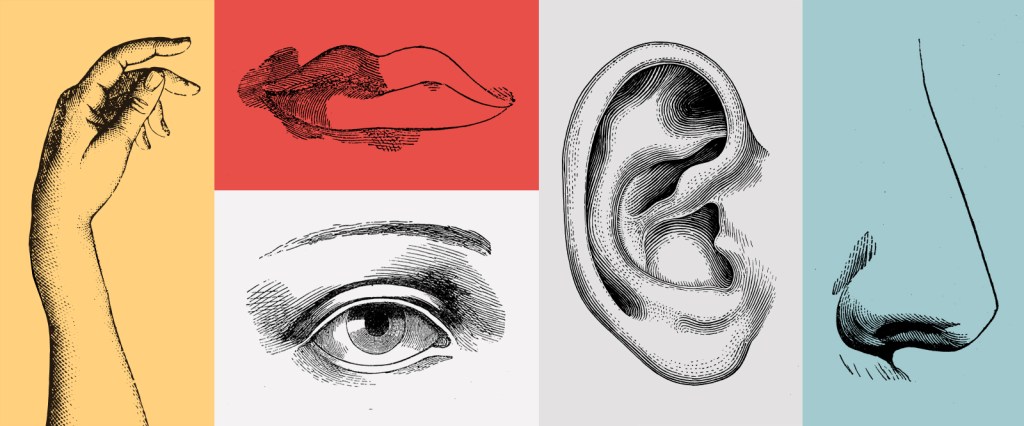
    Featured image by Jason Wirchin

    Diones

    October 21, 2022
    Socratic Dialogues
    dialogue, philosophy, senses, socratic dialogue
  • Has instant access to information improved things?

    Has instant access to information improved things?

    2 Has instant access to information improved things?

    1 Of course. Humankind has so much more potential as a result of technologies like the internet.

    2 What are the benefits of instantaneous access to information?

    1 It is a force multiplier for the human race. We can quickly grasp new information, share ideas, collaborate, and create at-scale works of art. Furthermore, it has advanced all the sciences in ways that would be unimaginable mere decades prior.

    2 Can such technology be used for nefarious purposes?

    1 There do exist bad actors. But I think the ability to learn quickly cannot be overstated.

    2 At what point would the technology prove too corrupt?

    1 I do not believe that point exists. The problem you describe is simply an implementation detail. Access to information is not the cause for corruption or disinformation.

    2 What is the cause of disinformation?

    1 I believe people have not learned to discern fact from fiction on a broad scale. Disinformation occurs when ideas are not challenged.

    2 Has the unrestricted access to information made this situation worse or better?

    1 It’s true that people are exposed to more ideas than they used to be. Without the skill to process it, perhaps the situation has gotten worse for some people and better for others.

    2 Does this change the landscape of the human condition?

    1 No. I do not believe so. Humans will always be human in their unique ability for both kindness and cruelty. Hate and love. Information does not change this basal nature.

    2 Before the internet, people were often meticulous in their research. Collecting information, following leads, drawing conclusions. Do you think this has been lost?

    1 There is nothing that prevents someone from being methodical even today. However, the motivation for seeking information has likely changed. 

    2 How so?

    1 Culturally, a lot of spaces have centered around the concept of karma. Upvotes and downvotes. Hearts. Likes. Reactions. Many people seek to understand a topic just well enough to make an informed (or inflammatory) argument.

    2 Is that the only motivation for seeking knowledge in this era?

    1 No. There are truth seekers, learners, educators, and a good deal of well-intended people who seek to collect and disseminate knowledge.

    2 This seems to be at odds with your earlier statement that “the motivation for seeking information has likely changed”.

    1 I concede to a degree, the categorical motivations are relatively unchanged. I would rephrase it as: the distribution across these categories has largely shifted from positive intent to neutral (and even negative) intent.

    2 Do you have an example of this?

    1 There are very clear examples of this at all levels of power. People being inflammatory just for the discourse that goes along with it. There are entire platforms dedicated to espousing destructive ideologies and ridiculous perspectives.

    2 You claim that a shift in motivation (towards reaction vs. truth) is the cause of disinformation, but earlier you stated that the cause of disinformation is due to a lack of education. How can both of these be true?

    1 I do not believe they are mutually exclusive. As a society we have shifted from truth-seeking to reaction-seeking. I’m certain one reason this is so easy for many people to adopt is because they lack the tools to parse inconsistent information. Furthermore, it is hard to know what to trust in an age with so many differing and loud opinions.

    2 Despite all this, do you still believe that instantaneous access to information is a force multiplier for humanity?

    1 Yes. I am not advocating we ignore the negative aspects of the internet. I am merely stating that, as a mechanism or platform, it has helped humanity grow and can continue to do so if we address some of the identified inadequacies.

    2 What happens if we don’t address those inadequacies?

    1 There may be a point in the future where this technology proves to be worse for humanity. For example: if its continued abuse leads to any kind of global catastrophe.

    2 But we aren’t there yet?

    1 I cannot say. True to form – humans are quite capable of both horrifying atrocities and magnificent innovation. We were capable before and are still capable now. The advent of instantaneous access to information does not diminish this. The good and the bad are both magnified. What we do with this powerful technology remains to be seen.


    Featured image by Jamie Zawinski

    Diones

    October 19, 2022
    Socratic Dialogues, Uncategorized
    dialogue, information, philosophy, socratic dialogue, the internet
1 2
Next Page

Blog at WordPress.com.

  • Subscribe Subscribed
    • Chit Chat Philosophy
    • Already have a WordPress.com account? Log in now.
    • Chit Chat Philosophy
    • Subscribe Subscribed
    • Sign up
    • Log in
    • Report this content
    • View site in Reader
    • Manage subscriptions
    • Collapse this bar